Managed services was made for another era, so we rebuilt the model
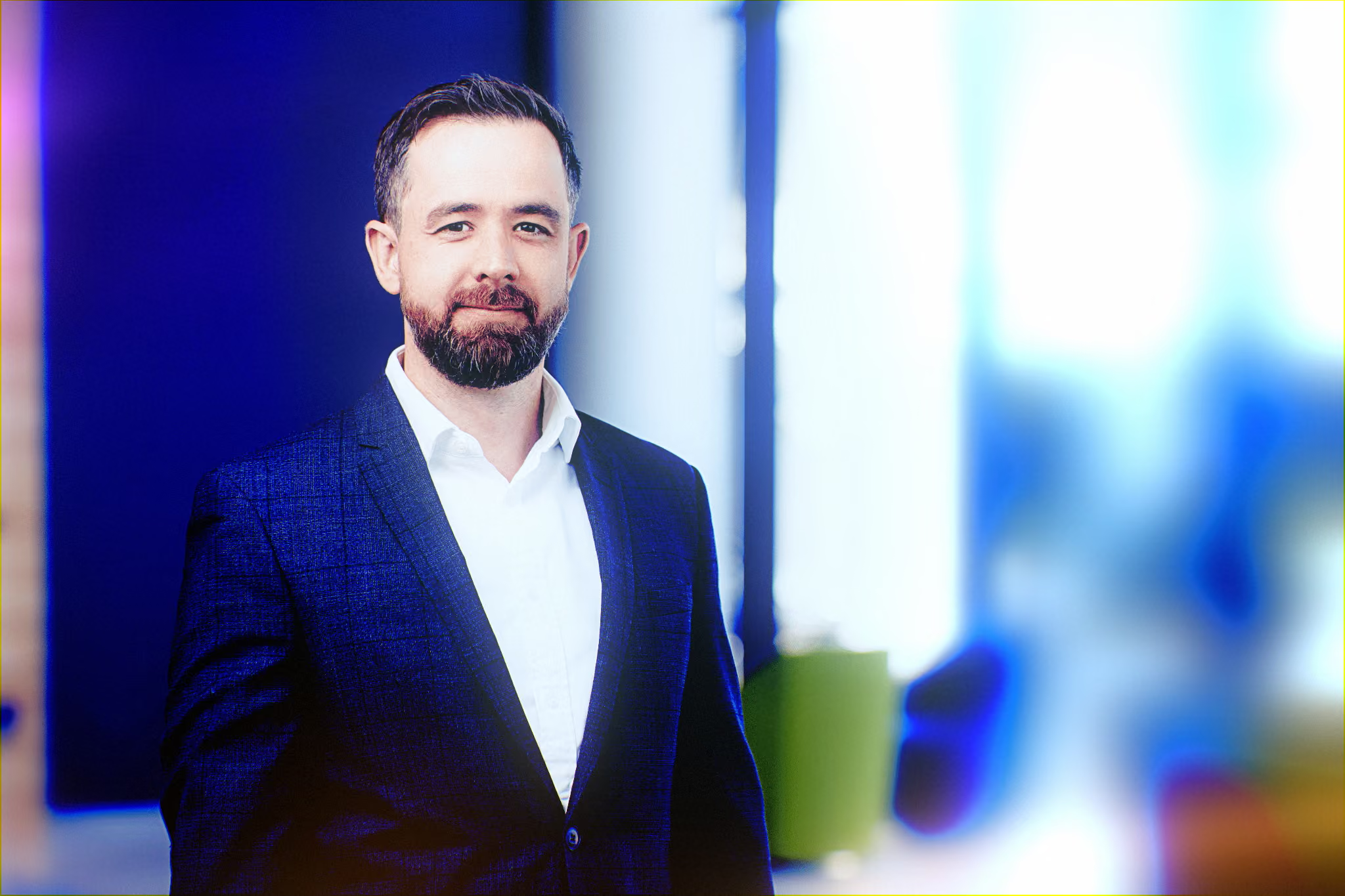
Published by Moxie Insights on 15 October 2026, under the title "Managed Services Reimagined: Why Outcome-Led MSPs Will Define the AI Era". Our CEO Michael Zuppa sets out why we have re-engineered what a managed service provider is for, and what we now measure instead of tickets.
The model that is running its course
For many years the managed services model was beyond reproach: a simple framework built to keep the lights on and close tickets against an SLA. Infrastructure stays up, alerts are monitored, tickets are raised, incidents get resolved inside the agreed window, and a monthly report proves it.
That model has propped up businesses and paid the ecosystem's bills for a long time. In the age of AI, Zuppa's argument is that it is no longer sufficient.
"The traditional managed services model was designed for a different era. That model was about keeping infrastructure available and up, monitoring alerts, and resolving incidents against an SLA: those typical managed services deliverables. While that's still very important and fundamental, it's just no longer enough."
Few providers would put it that bluntly, because those deliverables still make up most of what the industry invoices for. Zuppa's point is not about dollars and cents but about capacity and innovation.
Appointed CEO in July 2025, he has spent the first 12 to 15 months rebuilding the business around a different idea of what a provider is for — customer value, technology updates and vendor partnerships treated as one strategic puzzle rather than separate initiatives.
"I tie it back to our core vision. At blueAPACHE, we want to be the global mid-market IT service provider of choice. To deliver that, we have a mission which we've evolved: empowering our clients to outpace change, turning secure, reliable access into a launchpad for automation, transformation and long-term resilience."
From tickets to outcomes
A provider should be measured not by how many tickets it closes but by what changes for the business it serves. That means moving from a set of tools and response times to a platform the customer runs on — one that keeps improving and frees people to work on what moves the dial.
"A modern MSP should be providing more of a governed operational platform that continuously improves security, experience, automation and visibility, so that the customer's internal IT capacity, and that of our service delivery management, can move up the stack."
That opens the conversation to business process mapping, productivity, operational efficiency and changing how work is done: a shift from tickets to outcomes, from reactive response to predictive intervention, and from isolated tools to an orchestrated operating model.
On the question automation always raises, Zuppa is direct: the people do not disappear. Routine work becomes automated and the tooling becomes smarter and more agentic, while the effort moves towards judgement, design, governance and higher-value outcome services.
A capacity problem, not an innovation problem
The mid-market sits in an awkward middle. Smaller businesses can replace systems with little ceremony; large enterprises have the budget and specialist teams to buy past a problem. Mid-sized organisations get the complexity of the second with something closer to the resources of the first.
"In the mid-market, you have the complexities, regulations and demands you would in the enterprise. You have some legacy and some restrictions, so you can't move as quickly. So it's not so much a challenge of innovation. We see it as a challenge of capacity."
That reframing changes what we are meant to fix. If the problem were a shortage of ideas, the answer would be more advice. If every hour of internal IT time is already spoken for, the answer is to give those hours back — which starts with simplifying and standardising, and getting customers off a patchwork of disconnected tools.
Zuppa is candid that we are doing as much pushing as being pulled, because customers sit at very different points in their journey.
What we expect to happen to price
We say openly that over the next two to four years we expect managed services pricing to come down significantly — but only for customers who have adopted aligned, integrated technology. With an orchestrated platform approach, Zuppa's position is that costs can genuinely be driven down.
That is an expectation about direction, conditional on the technology a customer runs. It is not a quoted price and not a guaranteed saving.
The service desk nobody calls
The desk most staff know — a phone number or a portal and a queue — gives way to an agent that answers, diagnoses and in many cases fixes the problem before anyone notices.
"We paint a picture where, if a customer wanted to, they could inevitably have a fully agentic AI-driven service desk."
Calls answered by an agent with access to knowledge, prompting the next questions, raising the request and resolving the ticket. The shift to an autonomous desktop is already under way, with issues fixed without the customer knowing. Zuppa expects the interaction to end up in Teams chat — "I need a service request, I have an issue" — with the agent determining the next best course of action.
None of it works without the basics, and the basics are getting harder as vulnerabilities multiply across endpoints and devices. His point is that the foundation we are responsible for no longer stops at the laptop and the server room.
"That same foundation now needs to lift up. Where are you storing, creating, administering and governing your AI workloads and ecosystems? All the same fundamentals apply there: governance, regulation, who's got access, visibility, identity."
His advice to customers trying to keep pace with a new model release every few weeks is to stop trying: don't choose models, choose a platform. The platform is the stable part — the plumbing you put into the business — while models change frequently.
Don't forget the silent sufferer
The clearest illustration of the difference between the old model and the new one is that around 55% of end-users avoid raising tickets at all.
"That actually seems low if you think about it. How many people have a Teams call that wasn't great and then go and raise a ticket afterwards? They just carry on. This is what they call the silent sufferer, and that's huge in terms of productivity and operational efficiency."
Two problems hide in that number: the fault itself, and the effort of reporting it. The cost is not only technical — staff who quietly put up with tools that do not work are quietly frustrated, which makes it as much a question for a chief people officer as for a CIO. A model that measures success by closed tickets cannot see any of it, because the ticket was never raised.
So we stopped waiting for one. Instead of relying on people to report problems, we measure the experience of each device against every other device in the environment, and each customer against our other customers — experience by device model, geolocation and network connection — then put predictive, proactive and automated remediation on top of that telemetry.
"It's no longer about measuring tickets and SLAs, but measuring outcomes and experience. That's a big change in the managed services model we're launching. It's all about outcome-led, measured results. We're measuring real-time user experience."
The running cost of your own automation
An agent built to take friction out of a process might pay for itself in its first month and quietly stop doing so a few months later, and in most organisations nobody would notice. Zuppa sees financial operations as the next layer a provider has to manage.
"It's about economic outcome measurement. What do I have? Where is it running? What was it intended to save me? Is it still saving me that? Even if it is, is there a more efficient way of running it now than six months ago?"
Once a process is established, what began as an agentic AI project may be better run as standard workflow automation — businesses do not always need to be drawing down on tokens, costs and expenses. He is equally frank that the market is still maturing: "Not everything is available today. It's about having the foundation and platforms in place to support where this is evolving."
Three ways to engage
We have productised the model three ways. A full outcome-managed service experience. A platform-as-a-service option for organisations that want to keep their own IT operations and adopt our integrated platform — endpoint through to data centre, FinOps and observability — where the time to value compared with stitching the pieces together yourself is substantial, and which suits our largely Microsoft-centric customer base. And an enterprise option where we act as integrator and delivery partner for the vendors beneath our own platform, deploying into the customer's ecosystem.
Don't choose a Ford or a Toyota
Changing what customers consume means changing how they think about buying, and that takes education.
"If I need to get from A to B, am I driving a Toyota or a Ford? How much time do you want to spend assessing and working out which car gets you from A to B? You're already getting from A to B. Now let's look at how your business does what it does."
Spend that innovation capacity on the business instead: process flows, the low-hanging fruit, taking a little friction out of each process. Don't try to go too big — show how much is already possible with simple agents and Copilot Studio.
Because the change is cultural, we help customers grow their own champions through training partners, so people inside the business learn to find and back good use cases themselves. Zuppa is candid that we are learning alongside them, and that we are not experts in everything — perhaps a couple of months ahead of the more progressive customers, which is why partnering well matters. Our relationships with Microsoft and SoftwareONE bring in specialist AI expertise across industries when a customer needs more than the foundational work.
Customer zero, again
The hardest part of this shift has not been technical. It is organisational, and it depends on the willingness of the people at the top to change how the business works.
We have been through it before. When the push came for the Essential Eight and ISO 27001, we went first, made ourselves the test case, and turned what we learned into something customers could use — certifications, training, processes and enablement, codified into a blueprint. We are doing it again, only faster.
"This is not a technology problem. It's an organisational challenge, a cultural challenge and a new way of working."
A business attempting a security standard without executive endorsement will not get certified, because it is a top-down cultural initiative. This is more so again.
Being customer zero this time meant asking an uncomfortable question about our own future: if tickets stop being the unit of work, what happens to a business organised around them? The conclusion is that the work does not disappear, it changes shape. Running fleets of agents, workflows and platforms is complex in its own right, and that complexity is where the next generation of managed services sits.
The wave Zuppa expects next
He has watched a cycle like this before. As cyber insurance and standards took hold, suppliers were buried in questionnaires about how they handled data until certifications gave everyone a faster way to answer. He expects AI to start that cycle again, and to hit harder, because of the trust question around AI usage.
Customers will ask what processes you have created, who is building agents, where they were created, where they are governed, whether they touch a business process or information, and how you prove it.
A business that builds, governs and monitors its AI in one place can answer those questions. One where agents have sprung up wherever someone found them handy will be scrambling.
Read the full article
The complete interview is published on our main website: Moxie Insights — managed services was made for another era, so we rebuilt the model.
Related
- OUTCOME 2026: Outpace Change
- emPOWER Managed Services
- Managed Service Re-engineered bundles
- Our ControlUp partnership
- Guides, brochures and resources
Frequently asked questions
What is actually changing in the managed services model?
What gets measured. Instead of tickets closed and SLAs met, we measure outcomes and real-time user experience — the experience of each device against every other device in the environment, with predictive and automated remediation on top of that telemetry.
Does automation mean fewer people?
No. Zuppa's position is that routine work becomes automated and the tooling becomes more agentic, while the effort moves to judgement, design, governance and higher-value outcome services.
Why describe the mid-market's problem as capacity rather than innovation?
Because mid-sized organisations carry enterprise-level complexity, regulation and legacy with far closer to small-business resources. The constraint is not a shortage of ideas; it is that every hour of internal IT time is already committed.
Will managed services get cheaper?
We expect pricing to come down significantly over the next two to four years, but only for customers who have adopted aligned, integrated technology. That is a conditional expectation about direction, not a quoted price or a guaranteed saving.
What is the "silent sufferer"?
The roughly 55% of end-users who do not raise a ticket when something goes wrong and simply carry on. A model that counts closed tickets cannot see them, which is why we measure experience directly rather than waiting to be told.
What does FinOps have to do with managed services?
It is about the running cost of a customer's own automation. An agent can pay for itself in month one and quietly stop doing so later. We treat economic outcome measurement — what you have, where it runs, what it was meant to save, whether it still does — as the next layer to manage.
Is all of this available today?
No, and we say so. Zuppa's words: "Not everything is available today. It's about having the foundation and platforms in place to support where this is evolving."
Source
Moxie Insights, 15 October 2026. Quotes are Michael Zuppa's as published. Dated views and forward-looking statements are reproduced as his at the time of the interview.
Images on This Page
-
https://cdn.prod.website-files.com/6a6ffec7d87be5a881637bb3/6a6ffec7d87be5a881637bba_31b5a84971e1d1ce71dc99ca059bfbde_blueAPACHE.svg
blueAPACHE logo on a dark blue background
-
https://cdn.prod.website-files.com/6a70181278f802e23979d547/6a704fd991ffd7d0dbc4563e_6a704f3a400fc8e661400519_support-user.svg
(no alt text)
-
https://cdn.prod.website-files.com/6a70181278f802e23979d547/6abf381e9e0c3304aae8450e_6a8faffa0803d40169eebc40_01_executive_portrait_cinematic.avif
(no alt text)
-
https://cdn.prod.website-files.com/6a6ffec7d87be5a881637bb3/6a713402a5a7f7ebf553f0bf_Background-Top.avif
(no alt text)
-
https://cdn.prod.website-files.com/6a70181278f802e23979d547/6a94ed426586d8f094e31f8a_cobrand_card_cinematic.avif
Security Brief - blueAPACHE expands Huntress tie-up with reseller option
-
https://cdn.prod.website-files.com/6a70181278f802e23979d547/6a97bf808cd6fb2332032e62_blueAPACHE-ARN-Finalist-2026.avif
blueAPACHE named 2026 ARN Innovation Awards finalist, setting sights on an eighth consecutive win
-
https://cdn.prod.website-files.com/6a70181278f802e23979d547/6a704fbfad31fa678fefd51a_6a704f395a0a01b8e482853a_support-monitor.svg
(no alt text)
-
https://cdn.prod.website-files.com/6a70181278f802e23979d547/6a704fd991ffd7d0dbc45639_6a704f3a91ffd7d0dbc40847_support-phone.svg
(no alt text)
-
https://cdn.prod.website-files.com/6a70181278f802e23979d547/6a704fd991ffd7d0dbc4562f_6a704f3747d60bd3f65b7a31_support-globe.svg
(no alt text)
-
https://cdn.prod.website-files.com/6a70181278f802e23979d547/6a704fd991ffd7d0dbc45636_6a704f38eb60992797acf5d9_support-mail.svg
(no alt text)
-
https://cdn.prod.website-files.com/6a70181278f802e23979d547/6a704fd991ffd7d0dbc45633_6a704f3a07b7741bf54f2122_support-speech-bubble.svg
(no alt text)
-
https://cdn.prod.website-files.com/6a70181278f802e23979d547/6aa882a58d926f6ad5608dfb_LinkedIn.svg
(no alt text)
-
https://cdn.prod.website-files.com/6a70181278f802e23979d547/6aa8826083393c1523b64944_Instagram.svg
(no alt text)
-
https://cdn.prod.website-files.com/6a70181278f802e23979d547/6aa882557fce4cbee350b1c3_Facebook.svg
(no alt text)
-
https://cdn.prod.website-files.com/6a6ffec7d87be5a881637bb3/6a707520ca872d1b5a69a518_Sensiba.avif
Sensiba ISO/IEC 27001 Certified badge with a diamond-shaped logo below the text.
-
https://www.facebook.com/tr?id=541021476571056&ev=PageView&noscript=1
(no alt text)